
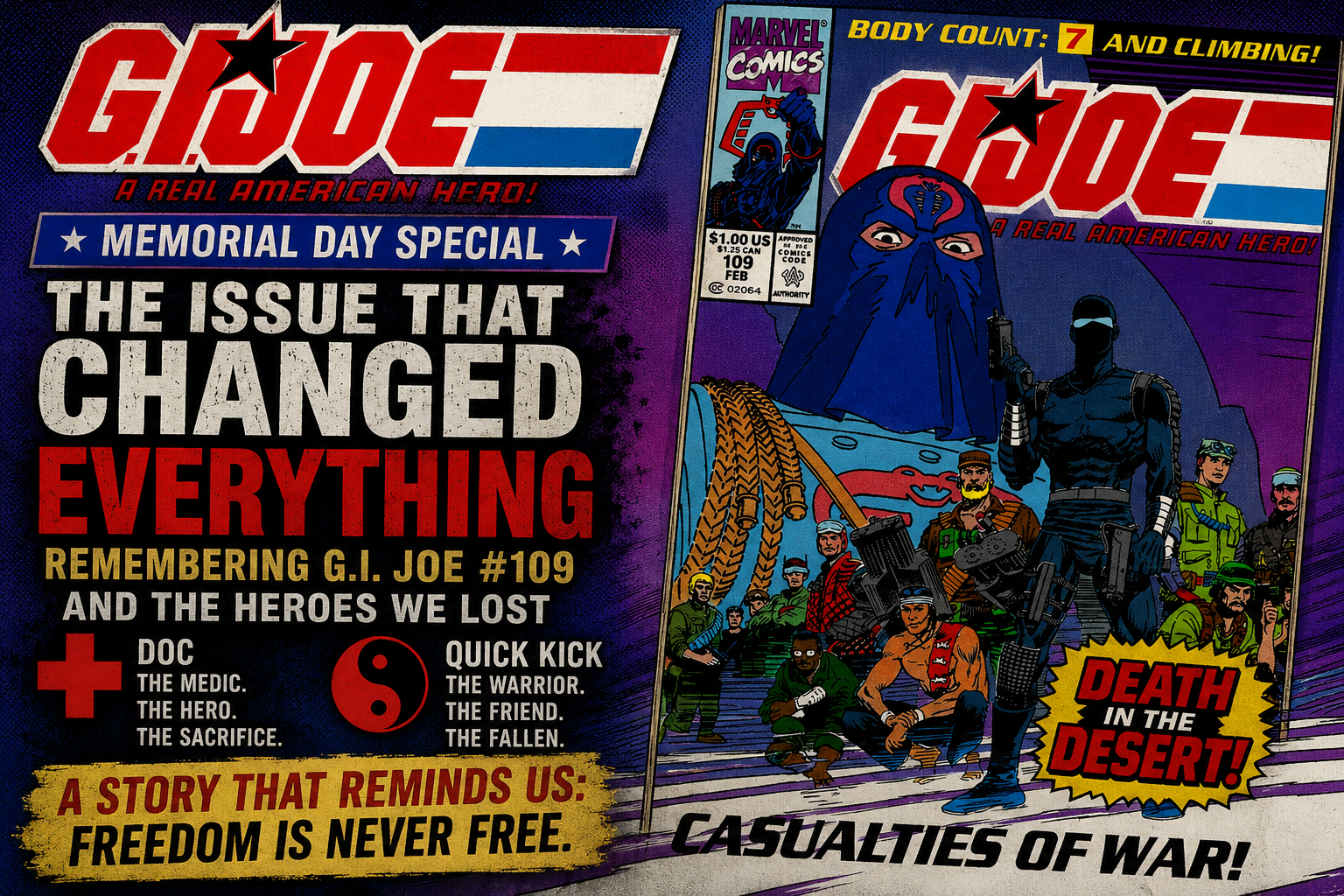
G.I. Joe #109: The Comic That Reminded Fans War Has a Cost
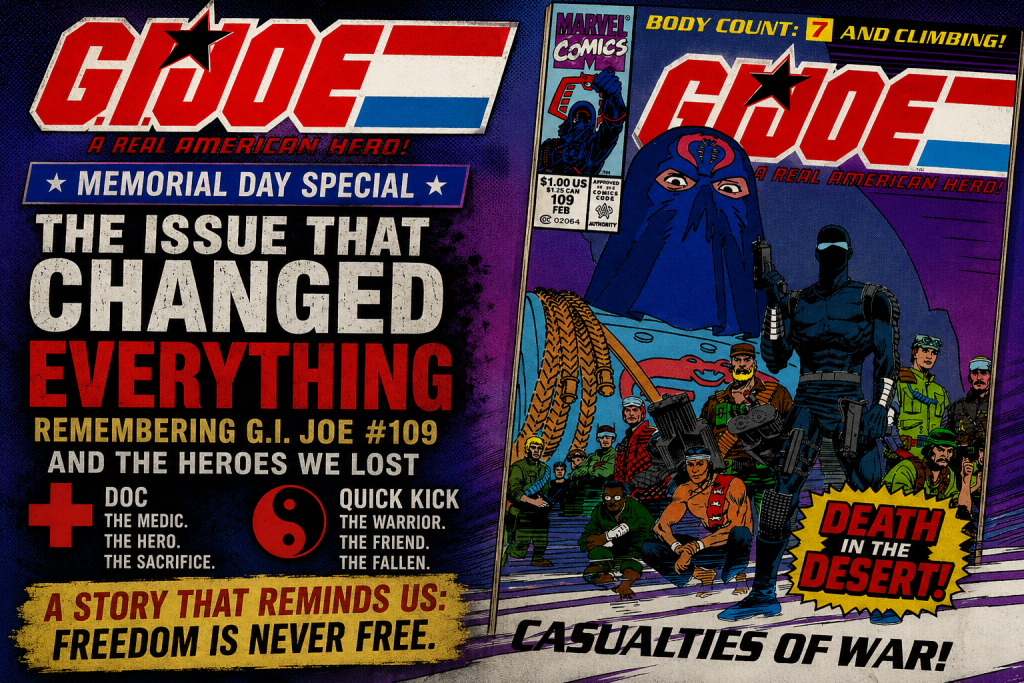
Memorial Day is a time to honor sacrifice, courage, and the heroes who gave everything in service to others. While most people associate those themes with real-world military history, one comic book issue unexpectedly captured the emotional weight of sacrifice better than almost any other in the history of licensed comics: G.I. Joe: A Real American Hero #109.
Released in 1991 by Marvel Comics, “Death in the Desert” stunned longtime readers by killing off several beloved Joe team members in one brutal mission gone wrong. Among the fallen were fan favorites Quick Kick and Doc. Decades later, the issue still stands as one of the boldest and most emotional stories ever told in the franchise.
For many fans who grew up with the Sunbow cartoon, G.I. Joe was a world where lasers missed, parachutes always opened, and heroes usually survived impossible odds. The Marvel comic series, written primarily by Larry Hama, was different. It treated combat seriously. Missions had consequences. Characters suffered injuries, trauma, and sometimes death.
Issue #109 pushed that realism further than ever before.
The story centers around a disastrous operation in the Middle East involving the Joe team and Cobra forces. During the conflict, a Cobra S.A.W.-Viper unleashes devastating machine gun fire on a group of Joes trapped in a ravine. The attack kills Doc, Thunder, Heavy Metal, and Crankcase in shocking fashion. Later in the issue, Quick Kick, Breaker, and Crazylegs attempt an escape in a stolen Cobra Rage vehicle, only for it to explode after taking enemy fire.
For readers in 1991, this was jaw-dropping. These weren’t random background characters. These were established heroes with years of comic appearances, file cards, and toy releases behind them. Seeing them die so suddenly changed the tone of the series forever.
Among the deaths, Doc’s hit especially hard. As the team medic, Doc represented compassion and humanity inside the chaos of war. He wasn’t defined by heavy weapons or flashy combat skills. He was the man trying to save lives while others fought battles. Losing him symbolized the harsh reality that even those dedicated to helping others are vulnerable during wartime.
Quick Kick’s death carried a different emotional impact. Introduced during the mid-1980s, he became one of the franchise’s most recognizable martial arts characters thanks to both the comic and cartoon series. He brought confidence, humor, and charisma to the Joe team. His death felt abrupt, unfair, and deeply tragic — exactly the way real losses often feel.
What makes this issue especially fitting to remember on Memorial Day is how honestly it portrays sacrifice. There are no triumphant speeches or dramatic last-minute rescues. The mission collapses into confusion and violence. Heroes die doing their jobs. Their teammates are left grieving and stunned.
That realism is part of why G.I. Joe: A Real American Hero remains respected decades later. Larry Hama infused the comic with lessons drawn from his own military experience, giving the series a level of authenticity rarely found in toy-based entertainment. Even when featuring ninjas, high-tech weapons, and larger-than-life villains, the comic never completely lost sight of the human cost of conflict.
Memorial Day reminds us that freedom and security often come with sacrifice. While fictional characters can never compare to real servicemen and women, stories like G.I. Joe #109 resonate because they reflect themes of duty, brotherhood, courage, and loss that are very real.
Thirty-five years later, fans still remember exactly where they were when they first read “Death in the Desert.” It remains one of the defining moments in G.I. Joe history — not because of explosions or action scenes, but because it dared to show that heroes are not immortal.
And sometimes, remembering the fallen is the most heroic act of all.
That’s a really interesting point about how comics can unexpectedly tackle serious themes like this. It’s wild to think a toy comic could do that so effectively.